
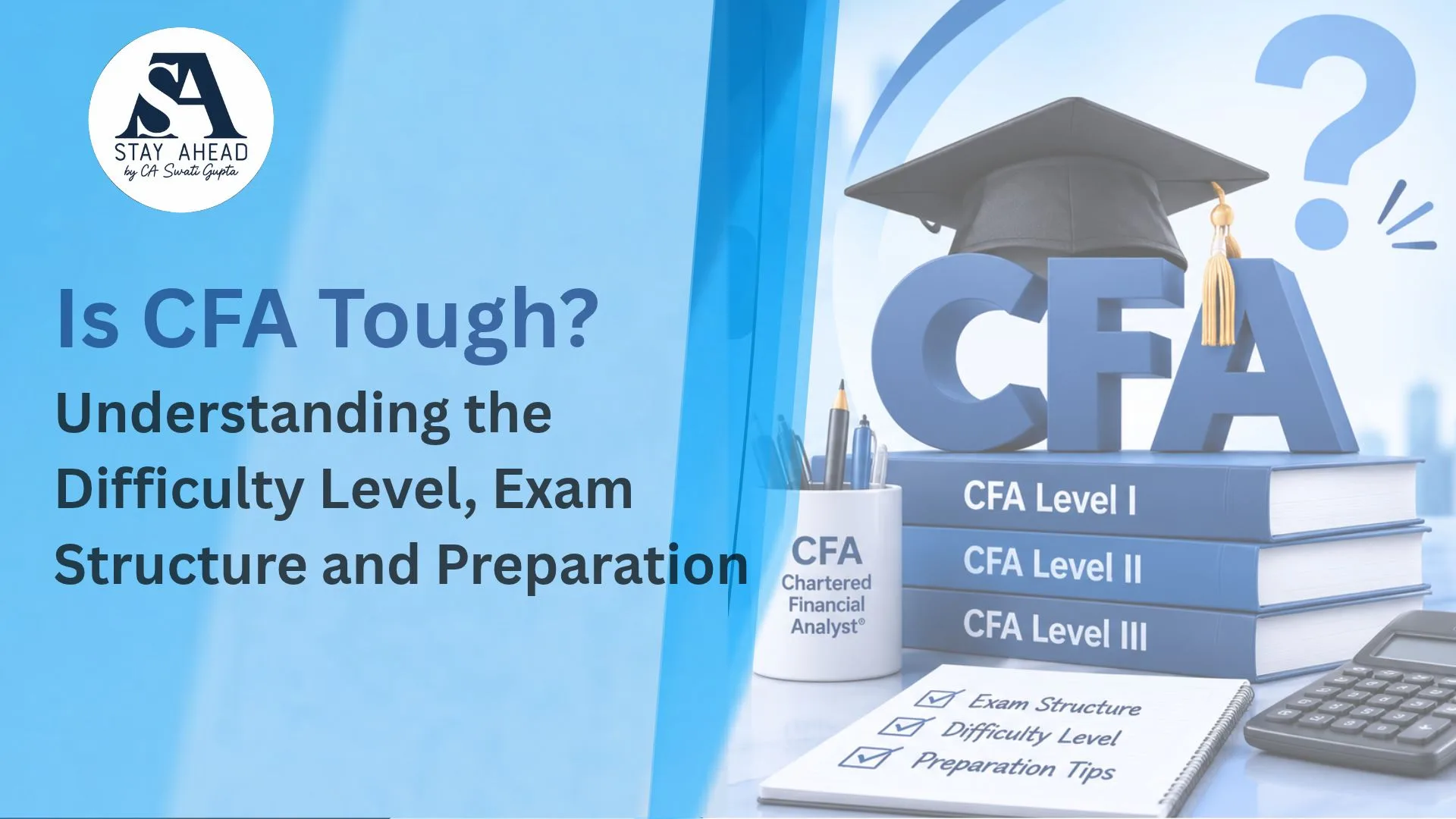
Is CFA tough? Ask ten candidates and you will get ten different answers. One calls it the hardest exam of their life. Another says it is very doable with a proper plan. Both are telling the truth, because the difficulty depends as much on how you prepare as on the exam itself.
Here is the honest picture. The CFA program is demanding, mostly because of its sheer volume and the months of steady study it expects. This guide explains how tough CFA really is, how hard CFA exams are level by level, what the pass rates say, and how to prepare without burning out.
First, it helps to know why people sign up. The charter carries real weight in investment banking, equity research, asset management and risk roles, so most candidates have a clear career goal. That goal is what keeps them studying when the syllabus feels endless.
Is CFA Tough? A Realistic Look at the Difficulty Level
Start with the numbers, because the CFA exam difficulty level shows up clearly in them. The August 2025 Level I sitting had a pass rate of 43%, and the ten-year average sits in the low 40s. Level II has historically landed in the mid-40s, while Level III has usually fallen between 50% and 55%. So on any given attempt, more than half of Level I candidates do not pass.
Those figures do not make the exam impossible. They show that casual preparation gets punished. Candidates who have worked in finance, or completed accounting internships, usually find the early reporting chapters less intimidating because they have already handled real statements. Beginners can still pass. They just need more hours.
Why Is CFA Tough for Most Candidates?
Three things drive the difficulty, and none of them is a trick question:
- Volume: Ten topic areas at every level, from ethics and economics to derivatives and portfolio management.
- Time: The official guidance is roughly 300 hours per level, and many working candidates need far more.
- Consistency: You study for months, often after a full day of work.
It also helps to compare the program with other credentials. A Certified Quality Auditor Certification, for example, focuses on one specialised field, so the syllabus stays narrow. The CFA program spans ten broad areas and expects you to connect them. That breadth, not any single formula, is why the exam feels heavy.
CFA Exam Structure: What You Are Actually Signing Up For
Level I: Testing Your Knowledge
Level I is the entry point. It has 180 multiple-choice questions split across two sessions, and it covers every topic at an introductory depth. The questions are mostly direct, but the syllabus is wide. Many candidates underestimate how much memorisation and calculator practice it needs, which is why the pass rate stays below 50%.
Level II: Testing Your Application
Level II moves to item sets, where one detailed case is followed by several questions. You must apply ideas rather than recall them. Financial reporting gets especially deep here, including intercorporate investments and consolidated financial statements, and many candidates feel the real struggle begins at this stage.
Level III: Testing Your Judgment
Level III shifts to portfolio management and wealth planning, with a mix of item sets and written, constructed-response answers. Writing a clear, logical answer under time pressure is a different skill from picking an option, so do not skip written practice. The pass rate looks friendlier here partly because only the persistent candidates are left.
Work Experience and Timeline
To earn the charter, you also need 4,000 hours of relevant work experience gained over at least 36 months. Most people take three to four years to finish the whole journey, so patience matters as much as intelligence. Is CFA tough only because of the exams? Not entirely. The long timeline and the work-experience rule test your stamina too.
How Hard Are CFA Exams for Beginners and Working Professionals?
Your background changes the workload. Finance graduates often manage with 300 to 350 hours per level. Non-finance candidates usually need 400 to 500, and busy professionals frequently land between 450 and 600 hours spread over a longer calendar. So, is CFA tough if you are starting from zero? Yes, but it is beatable with a steady routine.
Think of it like preparing for a marathon. Nobody runs 42 kilometres on day one. You build mileage week after week, and the exam rewards that same patience.
Common Mistakes That Make the CFA Feel Tougher
Is CFA tough, or do candidates sometimes make it tougher than it needs to be? Often it is a bit of both. These are the slips we see most often:
- Starting late and trying to cover the whole syllabus in the last six weeks.
- Reading the curriculum cover to cover without solving enough questions.
- Ignoring ethics because it looks like “common sense.” It is not, and it carries real weight.
- Studying in long, irregular bursts instead of short, steady sessions.
Fix these four habits and the exam instantly feels more manageable. Most of the difficulty lives in the process, not the paper.
Is CFA Tough? What Successful Candidates Do Differently
Candidates who clear the exam rarely have a secret. They treat the schedule as non-negotiable, they solve questions from week one, and they review mistakes the same day. Is CFA tough for them too? Of course. They simply respect the workload from the start.
Many also study in small groups or keep a short error log. Explaining a topic aloud to a friend exposes gaps faster than silent reading ever will. Add a few full-length mock exams in the final month, and you walk in knowing the pace and the pressure.
How to Prepare for the CFA Exam Without Burning Out
Build a Realistic Study Calendar
Work backwards from your exam date. Most candidates plan five to six months per level. Split the syllabus into weekly targets, and keep one buffer week per month for the days when work or life gets in the way.
Practise With Mock Exams Early
Do not wait until the last month. Start timed question sets in the first few weeks, because that is where you learn how the exam actually asks things. Review every wrong answer, not just the score.
Fix Weak Topics Before Re-Reading Strong Ones
It feels good to revise what you already know. It rarely moves your score. Track your errors by topic and spend your hardest hours on the two or three areas that keep costing you marks.
Protect Your Energy
Sleep, short breaks and a fixed study window beat last-minute all-nighters. Candidates who treat preparation like a routine, not a sprint, usually reach exam day calmer and sharper
Why Choose caswatigupta
Whether you are asking is CFA tough or already studying, you will notice that financial reporting is where marks are won or lost. That is exactly the area where caswatigupta can support you.
Concept-First, Practical Teaching
Courses at caswatigupta focus on understanding the logic behind IFRS and Ind AS, not memorising rules. When you understand why a standard works the way it does, exam questions feel far less random.
Strong Grounding in Reporting Standards
A solid base in international reporting helps you handle the financial statement analysis sections with more confidence, and it supports your day-to-day work as a finance professional too.
Guidance You Can Actually Apply
Lessons stay close to real situations that accountants and analysts face at work. You finish with skills you can use immediately, whether you are preparing for an exam or building a career.
Conclusion
So, is CFA tough? Yes, it is demanding. The syllabus is wide, the pass rates are modest, and the timeline is long. But it is not unbeatable. Candidates who plan early, practise often and strengthen their weak areas pass every year. In the end, asking is CFA tough really means asking how well you can prepare, not how talented you are. If you want a stronger footing in financial reporting before or during your CFA journey, caswatigupta is a good place to start building it.
Frequently Asked Questions
Is CFA tough to pass on the first attempt?
It can be. Level I pass rates sit below 50%, so many candidates need a second try. Candidates who follow a structured plan and take mock exams seriously improve their odds noticeably.
Which CFA level is the hardest?
It depends on your strengths. Level I tests breadth, Level II tests application and tends to feel the toughest, and Level III tests judgment and written communication. Most people rate Level II as the hardest.
How many hours should I study for each level?
The official guidance is around 300 hours per level. In practice, plan for 300 to 350 hours with a finance background, and 400 or more if the subject is new to you.
Can I clear the CFA while working full time?
Yes, many candidates do. Is CFA tough with a full-time job? It is, but manageable. You will need a disciplined routine, usually 10 to 15 hours a week, and a longer runway before the exam.
Does a non-finance background make the CFA harder?
It makes the first few weeks slower, mainly because the terminology is new. Once the language clicks, the gap narrows. Is CFA tough without that background? Only at the start. Extra hours on accounting and quantitative basics help the most.