

Every finance professional you admire started somewhere small. Usually it was a crowded desk, a reconciliation that refused to balance, and a senior who explained the fix with endless patience. That first stretch of real work is exactly what accounting internships offer.
A degree teaches you the rules. An internship shows you how those rules behave when deadlines, messy data and demanding clients enter the picture. So if you are wondering whether accounting internships are worth your time, the short answer is yes, and this guide shows you how to make the most of them.
Most students begin with simple tasks like data entry and bank reconciliations. Over a few months, though, good interns get pulled into bigger work, such as month-end closing and group reporting. Tasks involving accounting and consolidation show how separate entities roll up into one set of numbers, and that exposure is hard to get from a textbook.
What Are Accounting Internships, and Who Are They For?
An accounting internship is a short, structured work placement, usually lasting two to six months, inside an accounting firm, a corporate finance team or a bank. Some are paid, some offer a stipend, and a few are unpaid but arranged through a college. They suit commerce graduates, CA and ACCA students, and career changers moving into finance.
You do not need to be a top ranker to apply. Recruiters mostly look for basic comfort with accounting concepts, Excel and clear communication. If your technical footing feels shaky, an international accounting standards course before you start can help you speak the language of IFRS and Ind AS from day one.
Why Accounting Internships Matter More Than Ever
Hiring managers rarely trust a resume that lists only marks. They trust proof that you have handled real ledgers, met real deadlines and survived an audit season. That is why accounting internships often decide who gets the interview call and who does not.
Another reason is the global nature of modern reporting. Companies now expect junior staff to understand financial reporting standards such as IFRS and Ind AS, not just local rules. An intern who has seen these applied in actual working papers walks into a full-time interview with a clear edge.
Skills You Build During Accounting and Finance Internships
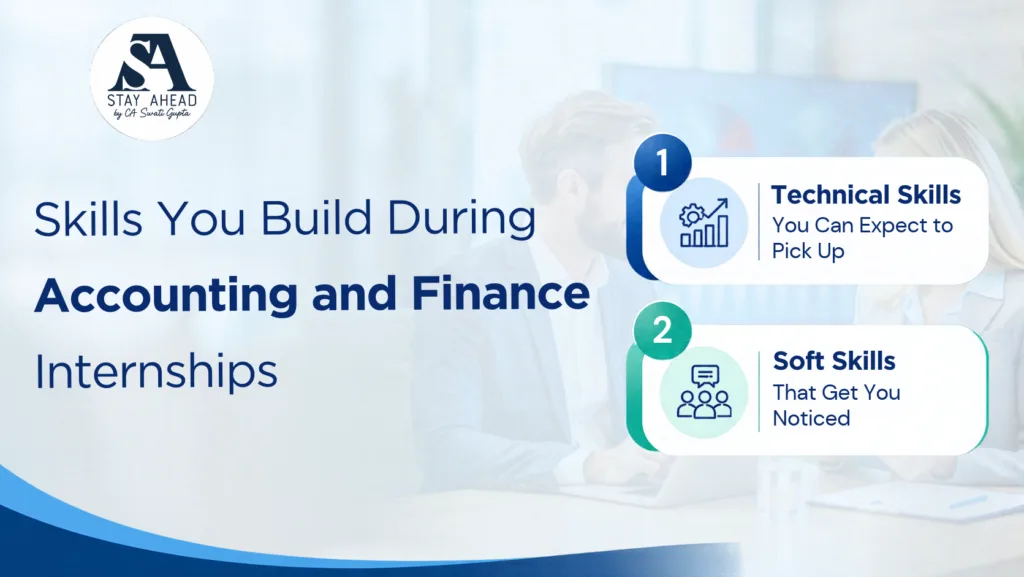
Technical skills grow quickly when you work on live files. Soft skills grow even faster. You learn to ask sharper questions, document your steps and take feedback without feeling defensive.
Here is a small example. Suppose your manager asks you to check how a software company books a yearly subscription. That single task introduces you to revenue recognition accounting, because you must decide when income is earned rather than when cash arrives. One assignment like this can teach more than a week of lectures.
Technical Skills You Can Expect to Pick Up
- Bank and ledger reconciliations
- Accounts payable and receivable handling
- Month-end closing support
- Excel functions, pivot tables and basic dashboards
- Exposure to tools like Tally, SAP or QuickBooks
- Preparing schedules for audit and tax work
Soft Skills That Get You Noticed
- Meeting deadlines without being chased
- Writing clear emails and short summaries
- Asking for feedback and acting on it
- Staying accurate when the work gets repetitive
How to Find Accounting Internships That Match Your Goals
Start with a clear target. Do you want audit, tax, corporate finance or financial reporting? Your answer shapes where you apply, and it keeps your applications focused instead of scattered. Students who pick a direction early usually get better responses from recruiters.
Where to Look for Openings
Check the careers pages of audit firms and mid-sized companies directly. Use LinkedIn and Internshala, and speak to your college placement cell. Alumni are another strong source, since a short, polite message often opens doors that a job portal never will. Many firms also hire interns by referral, so tell people you are searching. Smaller firms deserve a look too. Their accounting internships often give you wider exposure, because you may touch bookkeeping, tax filing and reporting in the same month, while larger firms tend to assign narrower tasks.
How to Write an Application That Stands Out
Keep your resume to one page. Lead with relevant coursework, software skills and small projects. Write a short cover note that names the team you want to join and explains why. Skip generic lines like “hardworking and passionate.” Instead, mention one concrete thing, such as a mock set of financial statements you prepared for a class project. Proofread twice, because typos in an accounting resume send the wrong signal about your attention to detail.
How to Make the Most of Your Internship
Treat week one as a listening exercise. Take notes, learn how the team organises its files and ask what good work looks like for each task. In the following weeks, offer to help with extra assignments once your core work is done. Punctuality, tone in emails and basic professionalism matter more than most interns expect in the first two weeks, because first impressions form quickly and tend to stick.
Keep a simple weekly log of what you learned. It turns vague experience into specific resume lines and sharper interview answers. Before you leave, ask for feedback and find out whether a reference or a full-time conversation is possible. Many of the best accounting internships turn into job offers simply because the intern stayed curious and dependable.
Common Mistakes to Avoid
Many students treat accounting internships as a box to tick, and that mindset shows. A few habits quietly hurt your growth, so watch out for them:
- Staying silent when you are stuck, instead of asking early
- Rushing through work without checking totals and references
- Ignoring confidentiality rules around client and company data
- Skipping the small tasks that teach the most
- Leaving without collecting feedback or contacts
Avoiding these mistakes does not take genius. It takes care, honesty and a willingness to learn. Interns who build that reputation earn stronger recommendations, and strong recommendations make later accounting internships and job applications far easier to win.
Why Choose caswatigupta?
Internships teach you how the work gets done. Strong concepts help you understand why it is done that way. That is where caswatigupta fits in. CASwatiGupta trains students and working professionals in IFRS, Ind AS and the ACCA Diploma in IFRS, with a focus on clear explanations over memorised answers.
Concept-First Learning With Real Examples
Standards feel far less intimidating when someone walks you from the principle to a practical case. She also shares explainers in both English and Hindi, which makes complex topics easier to follow for learners from different backgrounds.
Built for Students and Early-Career Professionals
If you are preparing for your first role or already sitting in one of the many accounting internships open today, caswatigupta can help you connect your daily tasks with the standards behind them. That connection is often what separates a good intern from a memorable one.
Conclusion
Strong finance careers rarely begin with a perfect resume. They begin with a first real project, a patient mentor and a habit of learning something new every week. That is why accounting internships remain one of the smartest early moves for any student or career changer.
Pick a direction, apply with focus, and treat every task as practice for the role you want next. Pair that hands-on experience with solid concept training from caswatigupta, and you give yourself a real advantage when interview season arrives. Start small, stay curious, and let your first internship open the door.
Frequently Asked Questions
1. Are accounting internships paid?
Many are, especially at audit firms and corporate finance teams, though stipends vary by city and company size. Some placements arranged through colleges are unpaid, so confirm the terms before you accept.
2. When should I apply for internships for accounting students?
Start looking two to three months before your preferred start date. Many students apply during their second or third year, and early applicants often get more choice of teams and locations.
3. Do I need to be a CA or ACCA student to apply?
No. Commerce graduates, B.Com and BBA students, and career changers all apply. Recruiters care more about your basics, Excel skills and attitude than about a particular qualification. If you are still studying, mention your coursework and any certification you are working toward.
4. How long do accounting internships usually last?
Most run between two and six months. Shorter summer programs exist, and some firms extend interns who perform well into longer contracts or full-time roles.
5. Can a short placement really lead to a full-time job?
Yes. Employers often prefer to hire someone they have already seen work. If you deliver on time, ask good questions and keep your work accurate, an internship can become your strongest interview.