
Spend any time around finance folks lately and one word keeps coming up — IFRS. Could be a colleague getting ready for an interview, a CA firm switching over its reporting formats, or a multinational client asking for IFRS-compliant statements. Point is, the standard has become more or less non-negotiable in global accounting now, which is probably why so many professionals are hunting for a decent IFRS certification course.
But not everyone wants it for the same reason, and that’s worth saying upfront. Some need it for international clients. Some need it because their company just got bought out by a foreign parent. Others, honestly, just want something extra on their resume before placements. Whatever your reason is, it helps to actually know what the course covers before signing up for one blindly.
So let’s get into it properly.
What Is IFRS and Why Does It Even Matter?
IFRS — International Financial Reporting Standards — is, in simple terms, a shared accounting language companies use worldwide to prepare their financial statements. Before this existed, every country had its own rulebook, and that made life miserable for anyone trying to compare companies across borders. IFRS cleaned that up quite a bit.
Think of it from an investor’s side for a moment. A company in Germany and one in India, both reporting profits under the same accounting logic — suddenly comparing them isn’t such a headache. That’s really the whole idea behind IFRS: comparability, transparency, trust.
Right now, upwards of 140 countries either require or allow IFRS in some form. India runs on its own version called Ind AS, which leans heavily on IFRS principles, so even accountants working only within India end up dealing with IFRS-style thinking more often than they’d assume.
A Quick Reality Check
Plenty of professionals still think IFRS only matters if you’re planning to work overseas. That’s just not accurate anymore. Domestic firms with foreign investors, subsidiaries of MNCs, even mid-sized companies prepping for an IPO — all of them increasingly expect people to understand IFRS-aligned reporting. It’s stopped being a “nice extra” and turned into something closer to a baseline expectation.
Who Should Actually Enrol in an IFRS Certification Course?
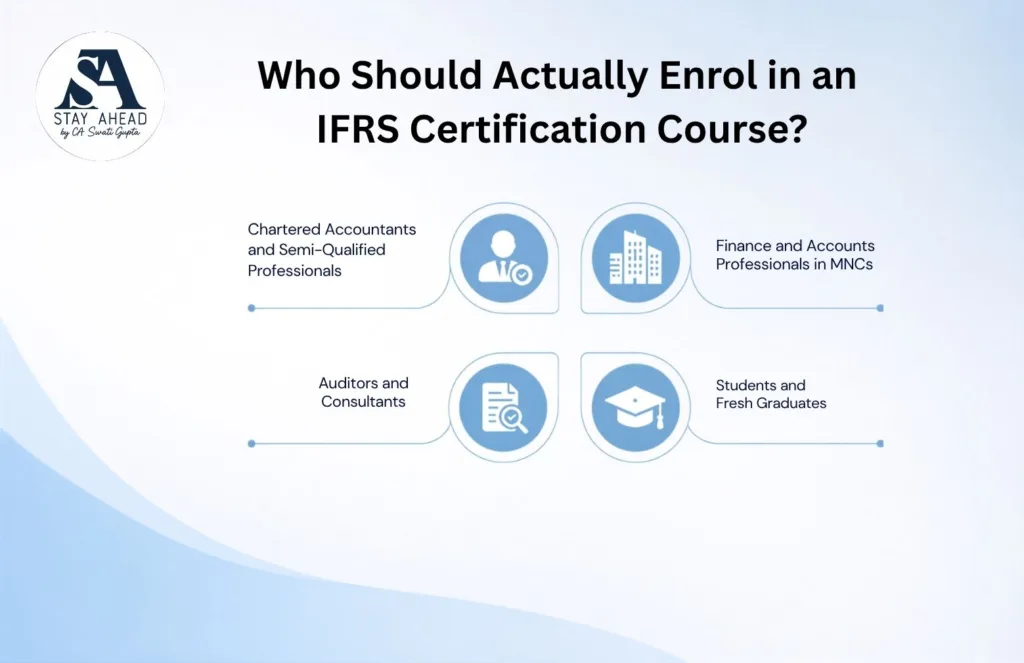
This is usually where people get stuck — not sure if the course fits their stage, worried it’s too advanced, or wondering if it’s even necessary for them. Here’s a more honest way to look at it.
Chartered Accountants and Semi-Qualified Professionals
If you’re a CA, CA-Inter, or still in the middle of your articleship, an IFRS certification adds something distinct to your profile. It tells people you’re not just comfortable with Indian GAAP or Ind AS — you can move into global reporting frameworks without needing time to catch up first.
Finance and Accounts Professionals in MNCs
If your company reports up to a foreign parent, or you sit on a consolidation team, odds are you’ve already handled IFRS adjustments without ever formally studying the standards behind them. Certification just puts a name and structure to what you’ve already been doing by instinct.
Auditors and Consultants
Auditors working with clients who have overseas operations or foreign listings need a working grip on IFRS to review those statements properly. It isn’t really optional at this point — it’s part of doing the job right.
Students and Fresh Graduates
For commerce graduates, or anyone early in their CA path, an IFRS course adds genuine weight during placements. Recruiters notice it, particularly at firms dealing with international clients or Big Four-adjacent work.
What Does an IFRS Certification Course Actually Cover?
A properly built IFRS certification course won’t just throw standard numbers at you and expect you to memorise them. It should build things up from the ground — starting with the conceptual framework and moving toward how it’s actually used in practice.
Core Areas You Can Expect
The IASB’s conceptual framework and how IFRS differs from local GAAP
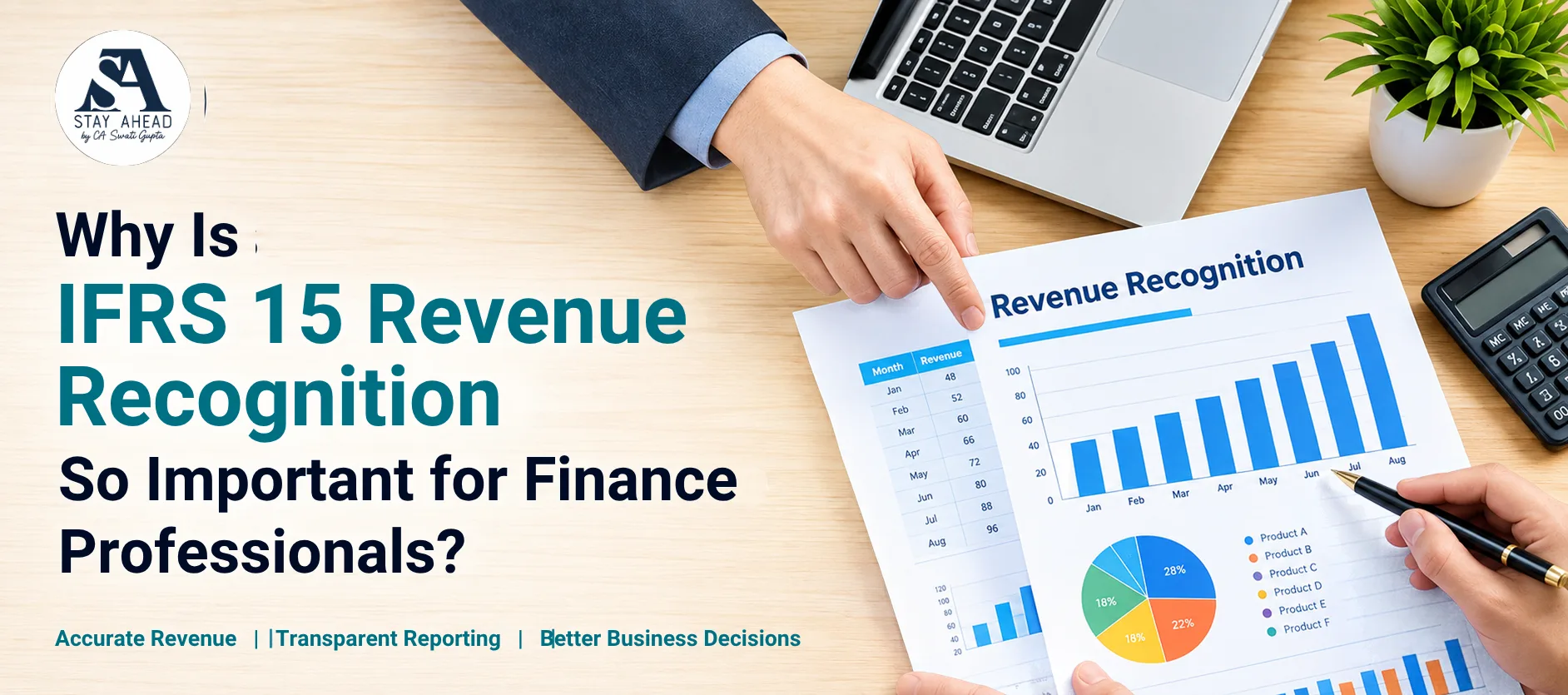
Revenue recognition under IFRS 15
Leases under IFRS 16
Financial instruments — IFRS 9
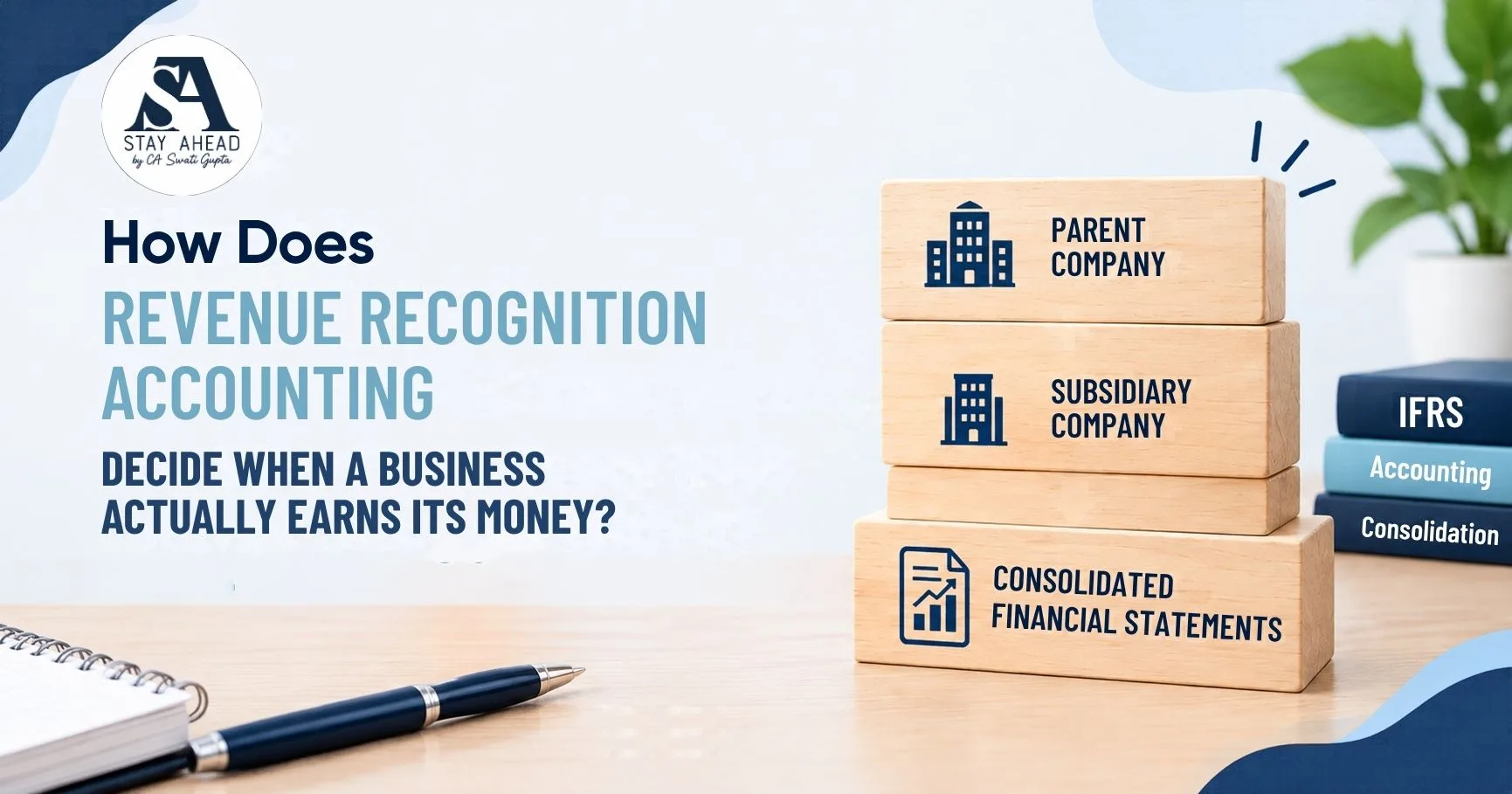
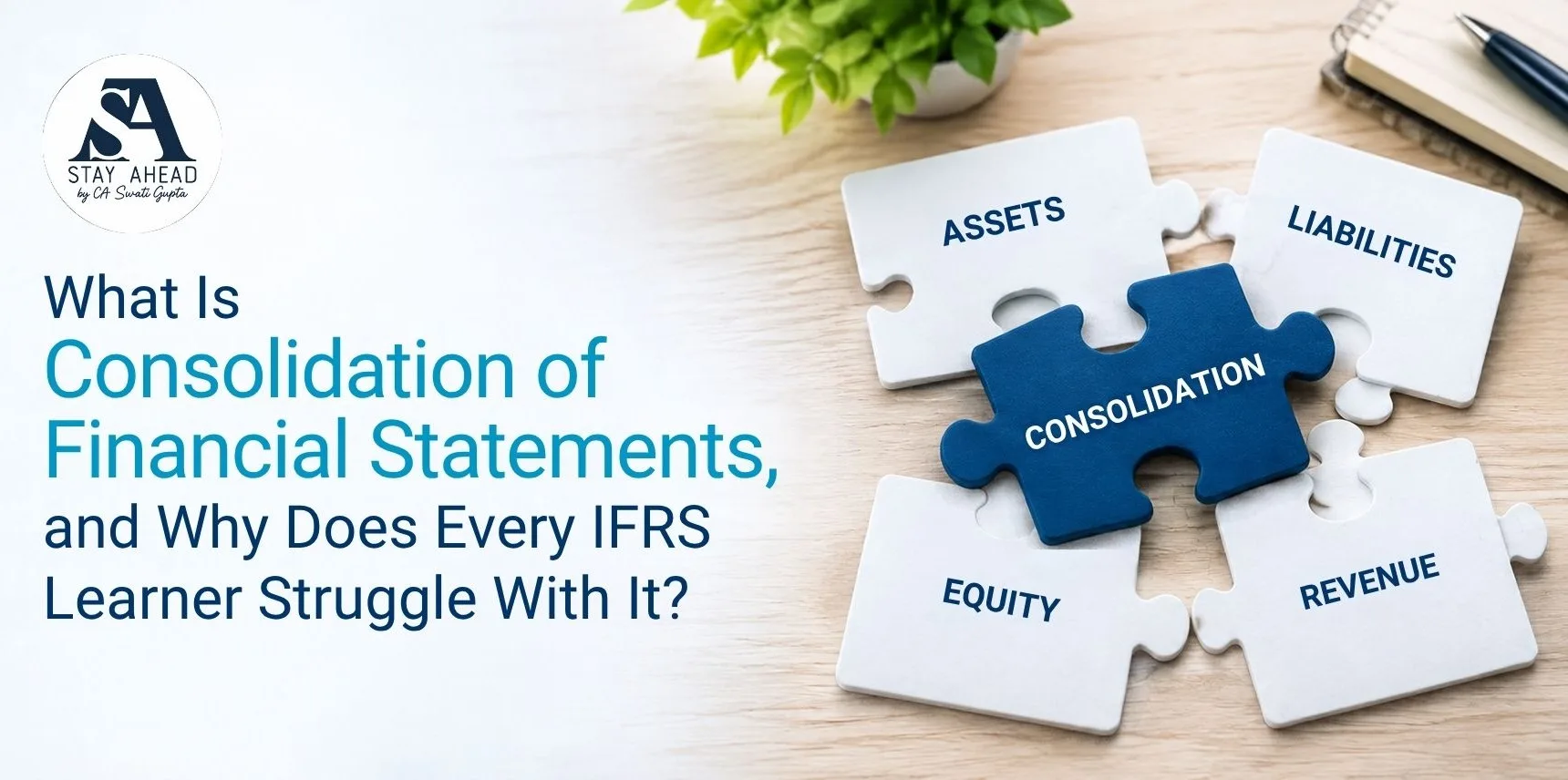
Consolidated financial statements and business combinations
Provisions, contingent liabilities, and impairment of assets
Fair value measurement principles
Why Practical Application Matters More Than Theory?
Reading the standards and actually applying them are two different skills, and people mix that up all the time. A course that only hands you definitions won’t prepare you for the messy real stuff — adjusting a lease liability, or recognising revenue over time on a long-term contract. Go for a course built around case studies and scenario-based problems, not one that’s purely lecture after lecture.
How Long Does It Take and What’s the Format Like?
Most IFRS certification programs run somewhere between one and three months, depending on how deep the syllabus goes and whether it’s self-paced or instructor-led. Online formats are pretty much the norm now, which works out well for working professionals who can’t sit through a fixed classroom schedule every week.
A good course usually includes:
Recorded or live sessions you can go back to
Practice questions after each module
Doubt-clearing support from faculty
A certificate of completion that actually carries weight in the industry
Should You Choose Self-Paced or Live Classes?
If you’re working full-time, self-paced learning with a mentor you can reach out to tends to hold up better over time. Live batches work better for people who need structure and a bit of pressure to actually finish. Neither one wins outright — it depends on how you personally get things done.
This question comes up constantly, and it’s a fair one. Ind AS is India’s own converged version of IFRS, so a good chunk of the logic overlaps. That said, there are real carve-outs and differences, especially around financial instruments and certain disclosure rules.
If you’re sticking purely to the Indian market, Ind AS is enough. But if you’re thinking about future-proofing your career or working with international clients someday, understanding IFRS on its own terms — not just filtered through Ind AS — gives you a lot more room to move.
Career Benefits of Getting IFRS Certified
Most people, fairly enough, want to know what’s actually in it for them before putting in the time and money. Here’s what usually shifts once you’re certified:
Stronger positioning for roles in MNCs, Big Four firms, and consulting
More confidence handling consolidation and group reporting
Better prospects abroad, especially across the Middle East, UK, and parts of Southeast Asia
Higher credibility when advising clients on cross-border transactions
A genuine edge during appraisals and promotions
It’s not some magic ticket, but it does clear a barrier a lot of your peers still haven’t gotten past.
Choosing the Right IFRS Certification Course
Not every course is built the same way, and picking the wrong one can cost you time and leave you with a certificate that doesn’t mean much. A few things worth checking before you enrol:
Does the certification actually carry weight in the industry, not just on paper?
Is the faculty practically experienced, not just academically qualified?
Why Choose CA Swati Gupta
A Course Built Around Real Application, Not Just Theory
When it comes to learning IFRS the right way, caswatigupta keeps the training rooted in how these standards get used in real accounting and audit work day to day, not just how they read on paper.
Guidance From Someone Who Understands the Learner’s Struggle
What makes caswatigupta different is the focus on clearing concepts one step at a time, so professionals at any stage — freshly qualified or years into their career — don’t end up lost in technical jargon along the way.
A Learning Environment That Respects Your Time
For working professionals juggling deadlines, caswatigupta shapes the IFRS certification course to fit around a packed schedule, without cutting corners on depth or doubt resolution.
If you’re serious about a career that isn’t boxed in by borders or outdated reporting knowledge, this is the kind of foundation worth putting your time into.
Does the course cover real case studies and recent standard updates?
Is there support after the course if you get stuck applying IFRS at work?
Frequently Asked Questions
1. Is an IFRS certification course useful for someone working only in India?
Yes. Many Indian companies with foreign investors, overseas subsidiaries, or IPO plans expect employees to understand IFRS-aligned reporting, even if the formal standard applied domestically is Ind AS.
2. How long does it typically take to complete an IFRS certification course?
Most programs take between one to three months, depending on whether you’re following a self-paced format or a live, instructor-led schedule.
3. Do I need to be a Chartered Accountant to enrol in an IFRS course?
No. While CAs and semi-qualified professionals benefit greatly, commerce graduates, MBAs, auditors, and finance professionals without a CA qualification can enrol too.
4. What’s the difference between IFRS and Ind AS?
Ind AS is India’s converged version of IFRS, sharing much of the same underlying logic but with certain carve-outs and modifications suited to Indian regulatory requirements.
5. Will an IFRS certification actually help me get a better job?
It significantly strengthens your profile for roles involving consolidation, cross-border reporting, or international clients, though it works best alongside solid fundamentals in accounting and audit.
If you’re ready to build IFRS expertise that actually holds up in real audits, consolidations, and interviews, exploring a structured course is a smart next step for your career.