
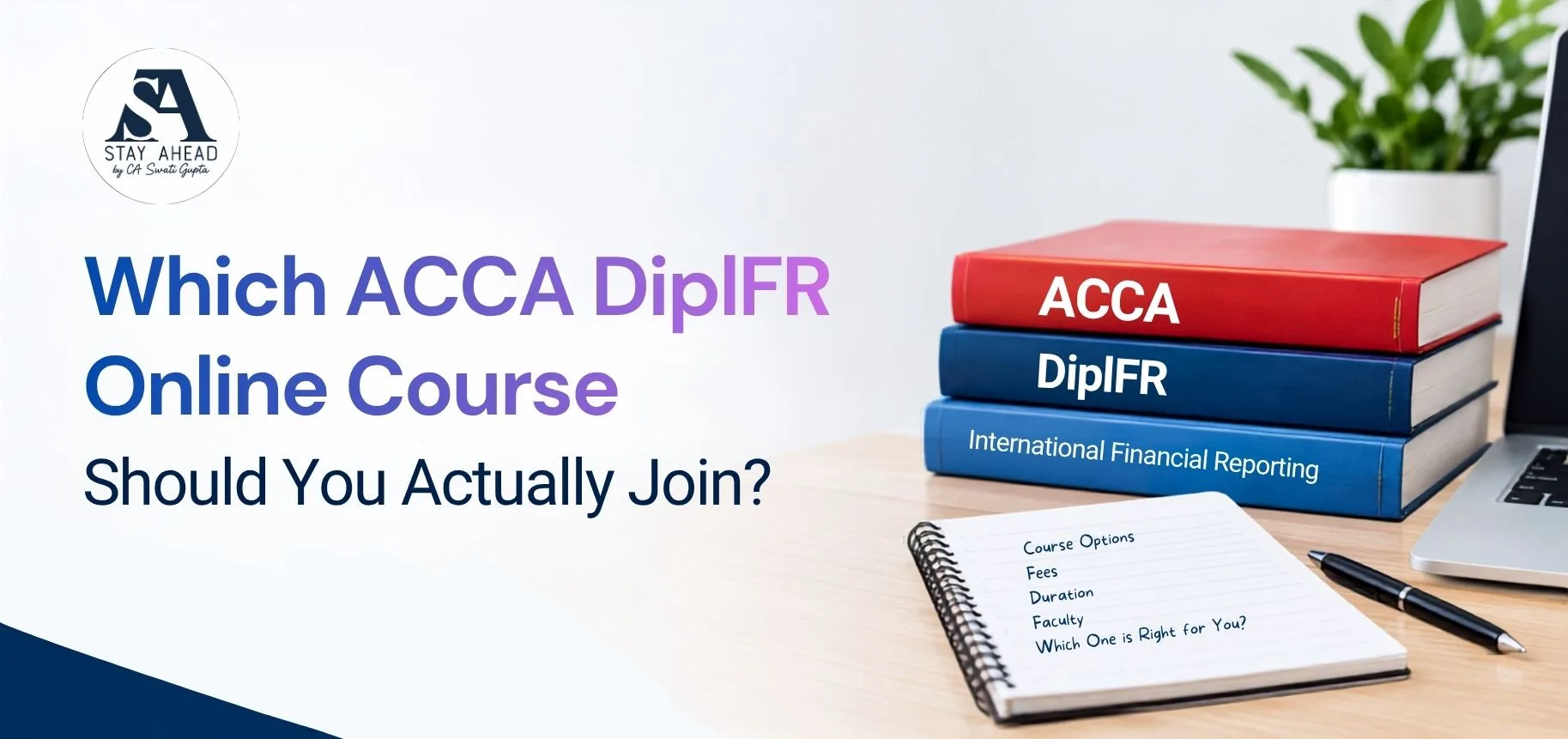
Spend an hour researching this and you’ll notice the same thing I did a few years back — every institute claims their ACCA DipIFR online course is “the best.” A 90% pass rate here, free e-books there, and at least three websites that just copy-paste the ACCA syllabus and call it a course outline. None of that actually tells you whether the course will work for you.
I get asked about this constantly — by CA students prepping for placements, by working professionals who audit MNC clients, even by qualified Chartered Accountants who just want an international qualification sitting on their resume. And the honest answer is, there’s no single “best” course. There’s only the one that fits how you study, how much time you realistically have on weekends, and whether you’re the kind of person who needs someone to explain a deferred tax adjustment out loud rather than reading it off a slide.
So instead of another “top 10 institutes” list, this post walks through what to actually check before enrolling in an DipIFR online course, why the delivery format matters more than most people assume, and where students commonly go wrong.
What Is the ACCA DipIFR Online Course?
DipIFR — the Diploma in International Financial Reporting — is a qualification from ACCA that tests how well you understand IFRS. It sounds deceptively simple on paper: one exam, three hours. But the syllabus itself is dense, stretching from financial instruments and leases all the way through to consolidated group accounts.
An ACCA DipIFR online course takes that syllabus and delivers it digitally — through recorded lectures, live weekend sessions, or usually a blend of both — so you’re not stuck relocating for a classroom programme or requesting leave every time there’s a class.
Who Actually Needs This Course
Three types of learners tend to show up here. CA or CMA-qualified professionals who already know Ind AS or Indian GAAP and want a globally recognised layer on top. Auditors and finance professionals dealing with IFRS-reporting clients. And semi-qualified students trying to strengthen their profile before campus placements begin.
If you’re in any of these buckets, picking the right course can genuinely shift how recruiters view your resume — particularly for roles touching cross-border reporting or consolidation work.
Why Bother With an ACCA DipIFR Online Course in 2026?
IFRS stopped being optional a while ago. Over 160 countries either require or permit it, and India’s Ind AS framework is largely converged with the same standards. Which means when you sit for DipIFR, you’re not learning something entirely new — you’re sharpening concepts you probably already touch at work, just applying them through a global lens.
A few reasons this qualification tends to hold up well against the effort:
It’s a single exam — unlike ACCA’s multi-paper route, DipIFR requires clearing just one paper, so the time commitment is smaller than most people expect. It’s designed to fit around a job, since almost every provider runs sessions on weekends or evenings. And it signals something specific to recruiters hiring for audit, reporting, or consolidation roles — that you can actually apply IFRS, not just recite it.
What to Check Before Choosing a DipIFR Online Course
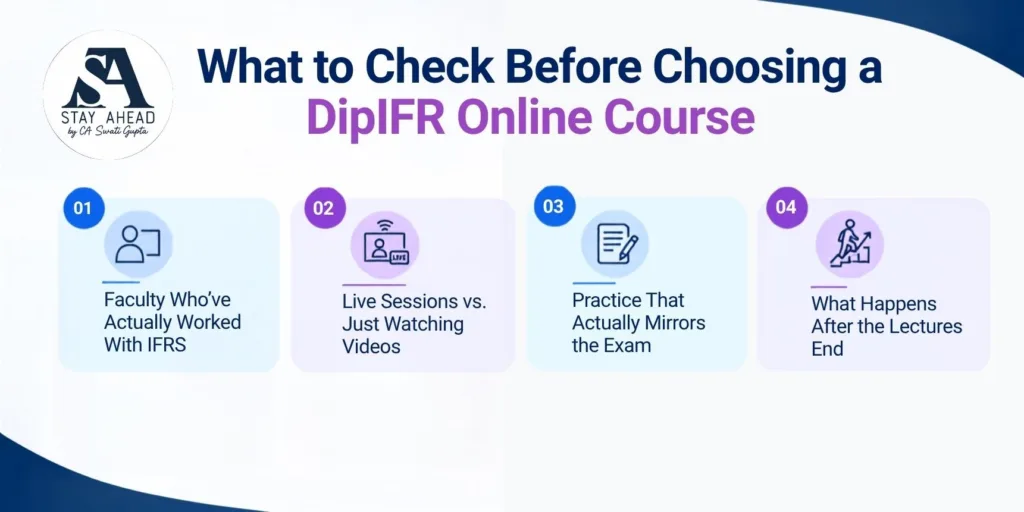
Most students filter by price first. Fee matters, sure, but it shouldn’t be the first thing you check when comparing an ACCA DipIFR online course against another — and price is rarely why people actually fail.
Faculty Who’ve Actually Worked With IFRS
Ask who’s teaching. A tutor who has handled real IFRS conversion assignments or consolidation work explains why a standard exists, not just what the standard says. That distinction becomes obvious the moment you hit an application-based case study in the exam and realise textbook definitions won’t get you through it.
Live Sessions vs. Just Watching Videos
A course built entirely on pre-recorded videos feels fine right up until you’re stuck on a share-based payment adjustment at midnight with nobody to ask. Look for an ACCA DipIFR online course that gives you live doubt-clearing time, not a video library you’ll eventually stop opening.
Practice That Actually Mirrors the Exam
DipIFR examiners reward structured, well-reasoned answers — not definitions copied from a textbook. A decent course should build in past paper practice, timed mocks, and someone actually reviewing how you’re writing your answers, not just walking through slides.
What Happens After the Lectures End
Some institutes vanish the day your last session wraps up. Before enrolling, check whether there’s support closer to exam day — revision sessions, access to recordings if you fall behind, help with ACCA registration paperwork.
How the Course Structure Usually Looks
Providers vary in hours and pacing, but most well-built programmes follow roughly this order: foundational modules first (conceptual framework, presentation of financial statements, standards like IAS 16, IAS 38, IAS 37), then the heavier application modules — financial instruments, leases, revenue recognition, share-based payments — followed by consolidation and group accounts, which honestly carries the most weight in the real exam. Revision and mock exams come last, run under timed conditions so the actual paper doesn’t catch you off guard.
Knowing this rough sequence is useful mainly because it tells you whether a course you’re evaluating is genuinely thorough, or just skimming through the syllabus to keep the batch short and the marketing punchy.
Does an IFRS Online Course Matter Beyond Just Passing DipIFR?
Worth saying this plainly — a broader grounding in IFRS pays off well past exam day. Concepts like fair value measurement, impairment testing, or consolidation aren’t exam tricks you forget once you’ve cleared the paper. You’ll run into them again in audits, financial due diligence assignments, and reporting reviews for years afterward.
What Separates a Good Financial Reporting Course Online From a Mediocre One
A good one connects standards to how financial statements actually get prepared and reviewed in practice — not just how they’re tested. If a course teaches you to answer exam questions without ever explaining the business logic behind an adjustment, you’ll hit a wall the first time you’re asked to apply it at work rather than on paper.
Why a Strong Grip on Financial Statements Matters for DipIFR
At the core of it, DipIFR is testing whether you can prepare and interpret group financial statements correctly under pressure. That’s precisely why a solid financial statements course matters as preparation — it trains you to actually read notes, adjustments, and disclosures the way both an examiner and, later, an employer will expect.
Mistakes That Keep Showing Up
A handful of patterns repeat themselves among students who end up reattempting the exam. Picking the cheapest option without checking anything else. Skipping mock exams because “there’s still time” — there usually isn’t, once work picks up. Sticking to recorded lectures and never once asking a live doubt. Starting preparation too close to the June or December sitting and running out of runway.
None of this comes down to intelligence or how hard someone worked. Nine times out of ten, it’s simply that the ACCA DipIFR online course they picked didn’t match how they actually needed to learn.
Why Choose CA Swati Gupta for Your ACCA DipIFR Online Course?
If you’ve read this far, you already know the right course isn’t the one with the loudest ads — it’s the one built around how the exam is actually structured and how professionals actually learn under time pressure.
That’s the thinking behind CA Swati Gupta’s ACCA DipIFR online course. Sessions are led by faculty with real, hands-on exposure to IFRS and Ind AS conversion work — not tutors who’ve only ever taught the theory from a slide deck. Every module is taught with exam technique built in, focusing on how ACCA examiners actually expect answers to be structured, alongside genuine live doubt-clearing so you’re never stuck without a way forward.
Whether you’re a working professional trying to squeeze study into evenings, or a CA aiming to add a global qualification to your profile, this course is built to get you exam-ready without padding the schedule with filler content. If clearing DipIFR in one attempt matters to you, it’s worth a proper look before you sign up anywhere else.
Frequently Asked Questions
1. How long does an ACCA DipIFR online course usually take to complete?
Most students wrap up preparation in 3 to 6 months, depending on how many hours they can realistically give it each week around work.
2. Is DipIFR suitable for someone without an accounting background?
Not really — DipIFR generally requires relevant accounting or audit experience, or a recognised qualification like CA, CMA, or ACCA. It isn’t built as an entry point for complete beginners.
3. Can I clear the exam using only recorded lectures, or do I need live sessions?
Recorded content helps with flexibility, but live sessions matter a lot when you hit genuinely tricky areas — consolidation and financial instruments especially — that are hard to self-study without someone walking you through it.
4. How is the DipIFR exam pattern different from a regular ACCA paper?
DipIFR is a single three-hour written exam held twice a year, in June and December. Unlike ACCA’s multi-paper qualification route, you only need to clear this one paper to earn the diploma.