
Ask any Diploma in IFRS candidate which topic keeps them up at night, and you will hear the same answer more often than not: consolidation of financial statements. It carries heavy weightage in the exam, it shows up in almost every job interview for a reporting role, and it is the one area where a small error at step one quietly ruins every number that follows.
Here is the good news. Once you understand why a group prepares combined accounts in the first place, the consolidation of financial statements stops feeling like a maze of adjustments and starts behaving like a logical, repeatable process. This guide walks you through that logic — in plain language, with examples you can picture.
What Does Consolidation of Financial Statements Actually Mean?
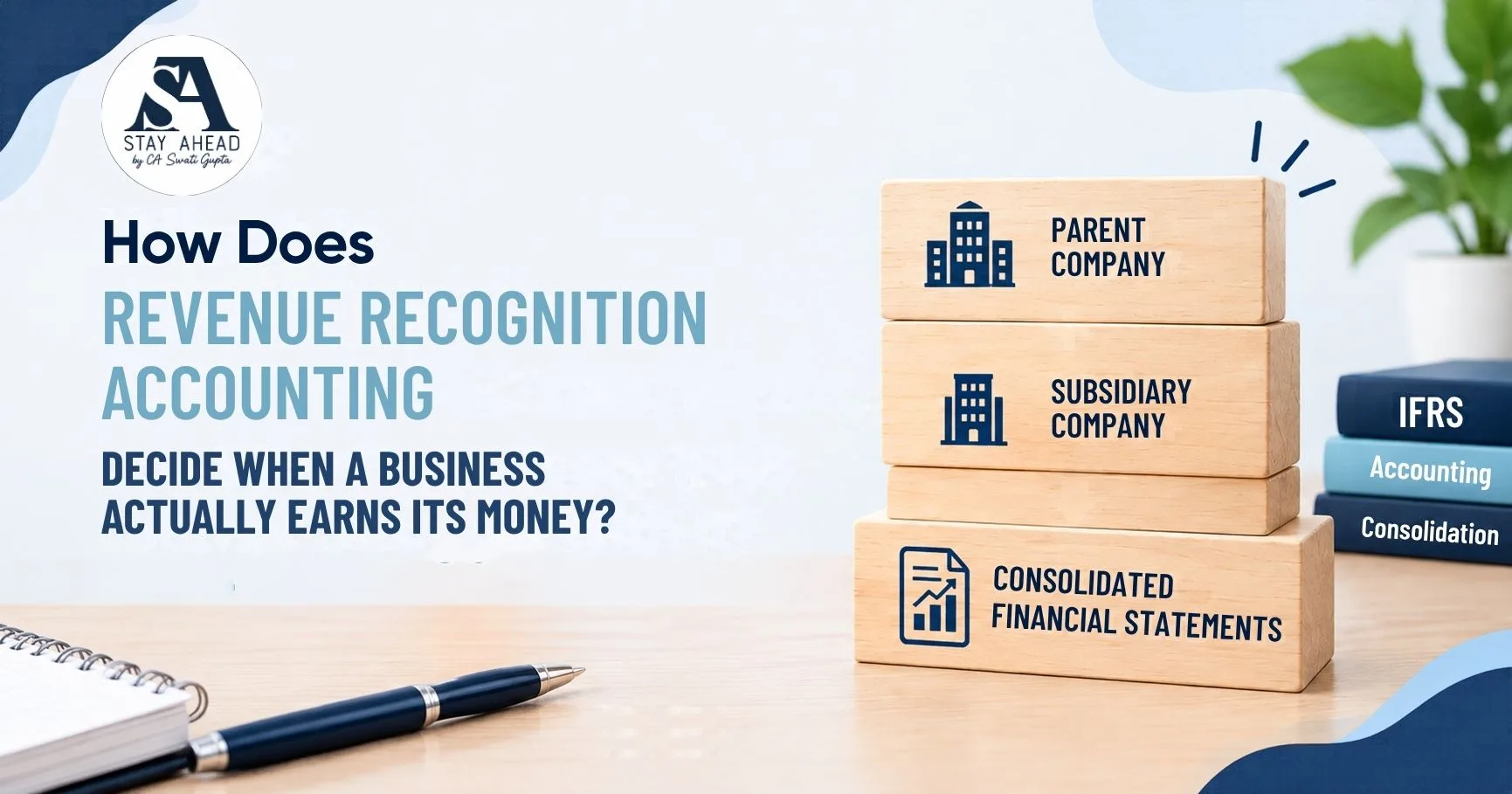
Think of a parent company that owns 80% of a subsidiary. Legally, these are two separate entities with two separate sets of books. Economically, though, they operate as one business — one management team, one strategy, one pool of resources.
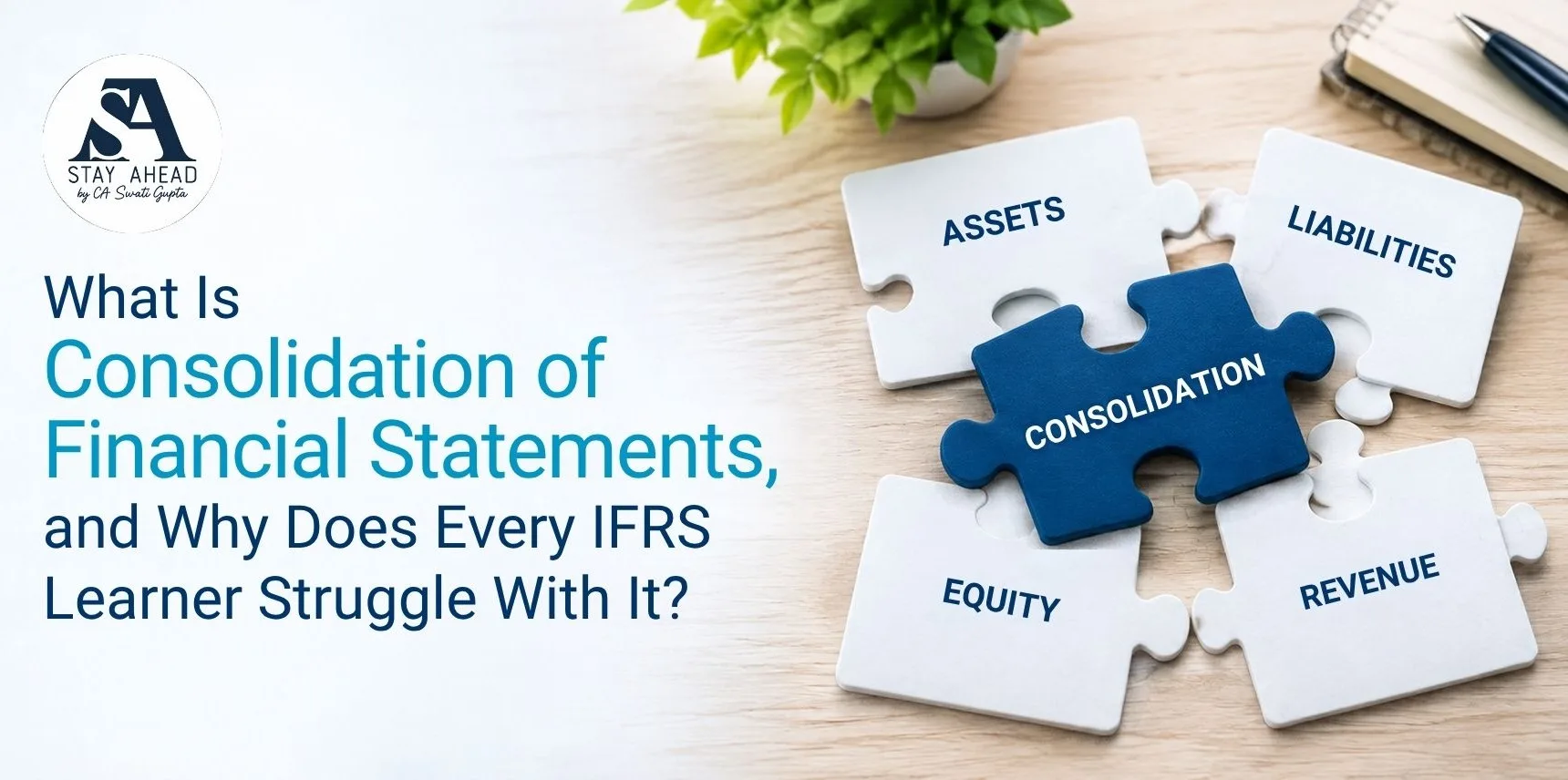
The consolidation of financial statements is the process of presenting that economic reality. You combine the parent’s and the subsidiary’s assets, liabilities, income and expenses line by line, then remove everything that happened inside the group so only outside transactions remain.
A useful mental model: imagine drawing a circle around the parent and all its subsidiaries. Anything crossing that circle is real. Anything bouncing around inside it is noise, and noise gets eliminated.
Why Does IFRS Insist on Consolidated Accounts?
Investors lend money and buy shares based on numbers. If a parent could sell inventory to its own subsidiary at a 40% markup and book profit on it, standalone accounts would show growth that never happened.
IFRS 10 closes that door. It requires the consolidation of financial statements whenever one entity controls another — and control, importantly, is not simply about holding more than half the shares. Under IFRS 10, control exists when the investor has power over the investee, exposure to variable returns, and the ability to use that power to affect those returns.
Control Is Not Always 51%
This is where candidates slip. A company holding 45% can still control a subsidiary if the remaining shares are scattered among thousands of small investors who never vote together. Equally, a 60% holding may not give control if a shareholders’ agreement hands key decisions to someone else.
Judgement matters here. Ticking a percentage box is exactly the kind of shortcut that examiners love to punish, and a structured IFRS certification course will spend real time on these grey-area scenarios rather than glossing over them.
How Does the Consolidation Process Work, Step by Step?
Most people learn the adjustments before they learn the sequence, which is why their answers fall apart under time pressure. Follow this order instead.
Step 1: Establish the Group Structure
Draw it. Always. Note the parent’s holding percentage, the acquisition date, and whether control was acquired mid-year. A one-minute diagram prevents ten minutes of confusion later.
Step 2: Add Across, 100% at a Time
Combine assets and liabilities in full — yes, even for an 80% subsidiary. This surprises beginners, but the logic is sound: the parent controls all of those assets, not four-fifths of them. Ownership of the remaining slice is reported separately as non-controlling interest.
Step 3: Calculate Goodwill
Goodwill is the consideration transferred plus the non-controlling interest, less the fair value of the subsidiary’s net identifiable assets at acquisition. Remember that fair value adjustments — an undervalued building, an unrecognised brand — belong at acquisition date and must then be depreciated or amortised going forward.
Step 4: Split Pre- and Post-Acquisition Reserves
Only profits earned after control was obtained belong in group retained earnings. Everything earned before that date sits inside the goodwill calculation. Getting this split wrong is the single most common reason a consolidation of financial statements produces a wrong group reserves figure.
Step 5: Eliminate Intra-Group Items
Now remove the internal noise:
- Intra-group receivables and payables, which cancel out entirely
- Intra-group sales and purchases, removed from both revenue and cost of sales
- Unrealised profit on inventory still held within the group at year end
- Intra-group dividends, loans and interest
A quick example. Parent sells goods costing ₹80,000 to its subsidiary for ₹1,00,000. At year end, the subsidiary still holds half of that stock. The unrealised profit is ₹10,000 — half of the ₹20,000 margin. You reduce group inventory and group profit by that amount, because from the outside world’s perspective, nobody has bought anything yet.
Step 6: Present Non-Controlling Interest Properly
NCI appears within equity on the statement of financial position and as a separate allocation of profit in the statement of profit or loss. Where the subsidiary was the seller in an unrealised-profit transaction, that adjustment must be shared with NCI too — a detail that separates confident candidates from hopeful ones.
What Are the Most Common Mistakes in Consolidation of Financial Statements?
After training thousands of learners, certain errors repeat with almost comic reliability.
- Consolidating an associate: A 30% holding usually means significant influence, not control. Associates go through the equity method — one line, not line-by-line addition.
- Forgetting mid-year acquisitions: If control was acquired on 1 October and the year ends on 31 March, only six months of the subsidiary’s results belong in group profit. Its assets and liabilities, however, come in at full year-end value.
- Missing the depreciation on fair value uplifts: You revalued the subsidiary’s building at acquisition, then never depreciated the uplift. That error flows into both group profit and NCI.
- Treating the consolidation of financial statements as arithmetic: It is not. Every adjustment answers a question about economic substance. Candidates who memorise formats without understanding the reasoning freeze the moment a question is worded differently — something a well-designed financial statements course actively trains you out of.
How Do You Get Genuinely Good at Group Accounts?
Reading theory will take you about 30% of the way. The remaining 70% comes from working problems until the sequence becomes muscle memory.
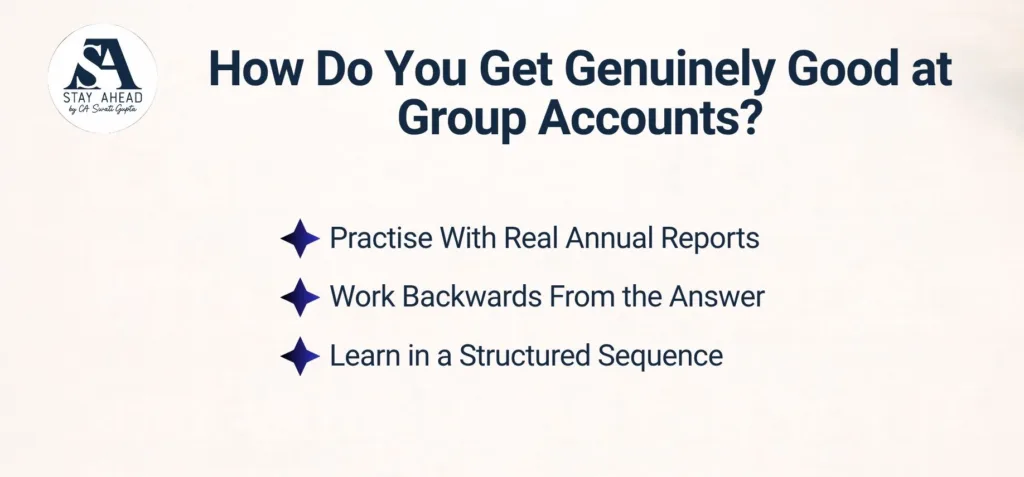
Practise With Real Annual Reports
Open the consolidated accounts of any listed group. Find the NCI line. Find goodwill. Read the note on business combinations. Suddenly the textbook stops feeling abstract.
Work Backwards From the Answer
When you get a question wrong, do not simply re-read the solution. Identify which step broke — structure, goodwill, reserves split, or elimination — and drill only that step.
Learn in a Structured Sequence
Self-study often means jumping between random topics. A guided IFRS online course builds concepts in the order they actually depend on each other, which saves weeks of circling back.
Why Choose CA Swati Gupta for IFRS Training?
Technical accuracy is table stakes. What learners consistently need is someone who can make consolidation of financial statements feel obvious rather than intimidating.
Taught by a Practitioner, Not a Reader
CA Swati Gupta brings years of hands-on IFRS and Ind AS experience, including corporate training delivered at firms such as Grant Thornton and academic sessions at leading commerce institutions. Explanations come with context from real reporting work, not just standard text.
Built for How Indian Professionals Actually Learn
Sessions are available in both Hindi and English, so language never becomes the barrier between you and a complex standard. Concepts are broken down for learners who are new to international reporting as well as qualified CAs sharpening their practical edge.
Doubts Get Answered, Not Queued
Weekend live doubt-solving sessions and an active WhatsApp support group mean a question you hit on Tuesday night does not stay unresolved until exam week.
Proven Track Record
Over 1,000 students worldwide have been trained for the Diploma in IFRS, and the feedback repeats one theme: complex standards explained in simple language, with examples that stick. If you want a complete financial reporting course online that treats you as a future professional rather than an exam number, this is it.
Conclusion
The consolidation of financial statements is not the hardest topic in IFRS — it is simply the least forgiving of shortcuts. Understand control, respect the sequence, eliminate internal transactions honestly, and give non-controlling interest the attention it deserves, and group accounts become one of your strongest scoring areas.
The learners who master consolidation of financial statements are rarely the ones who studied longest. They are the ones who understood why each adjustment exists. That clarity is exactly what structured mentoring delivers, and it is what caswatigupta has built its teaching approach around.
Start with one group question today. Draw the structure. Work the six steps. Then do it again tomorrow.
Frequently Asked Questions
1. Is consolidation required if the parent owns less than 50%?
Yes, potentially. IFRS 10 is based on control, not a share-count threshold. De facto control through dispersed shareholding or contractual rights can trigger consolidation even below 50%.
2. What is the difference between consolidation and the equity method?
Consolidation combines the subsidiary’s items line by line and recognises NCI. The equity method, used for associates and joint ventures, shows a single investment line adjusted for your share of profits.
3. Are intra-group transactions always eliminated in full?
Yes. The full balance is removed regardless of the ownership percentage, because the group cannot transact with itself. The related unrealised profit, however, may be apportioned with NCI where the subsidiary was the seller.
4. How is a mid-year acquisition handled?
Include only post-acquisition income and expenses, time-apportioned. The statement of financial position picks up the subsidiary’s assets and liabilities at full year-end amounts.
5. How long does it take to become confident with group accounts?
Most focused learners reach exam-level comfort within four to six weeks of consistent daily practice, provided they follow a structured sequence rather than studying topics at random.